By Dr. Ridhima gupta (BAMS)
One of Ayurveda’s most treasured foods, GHEE has incredible healing properties. In ayurveda food is medicine, being used as a everyday ingredient in the Indian kitchen, it is one of the best fat used for cooking. Also known as clarified butter, is made by heating butter until all the water has evaporated and then filtering the milk solids until only the fat (ghee) remains.
In Ayurveda, GHEE preferably means GO GHRIT (cow ghee).
Cow ghee is considered to be the best of all unctuous substances.
WHY GHEE?
Ghee consists of fat soluble vitamins, which aid weight loss. Ghee also plays a key role in balancing hormones and maintaining healthy cholesterol. Ghee also has a high heat point, which prevents it from producing free radicals that damage cell function.” Ghee is clarified butter made from the milk of a buffalo or cow. Pure desi ghee, is ghee made of cow’s milk. It contains plenty of omega-3 fatty acids along with Vitamin A. Beyond our kitchens, ghee finds a coveted space in beauty and hair care rituals too.
Ghee has healing properties and improves mental function, the complexion, voice, eyes, and reproductive tissues.
It is also used as a carrier for healing herbs, and is added to some herbal oils.
One of the most famous formulation of ghee which is also used as a moisturizer is SHAD DHAUT GHRIT ( 100 times washed ghee).
SPECIALITY OF GHEE :
संस्कारस्य अनुवर्तनम् – it has a very unique capability to absorb the active constituents of an herb into it, without leaving out ghee’s inherent quality. This is known as YOGAVAHI.
For therapeutic purposes , the older the ghee is, the better its healing properties will be. It is said that the ghee that is 100 years old can even reduce kapha (dosha) in the body.
QUALITIES
Heavy, soft, oily and cooling in nature.
ACC. TO AYURVEDA :
- Taste (rasa) – sweet (Madhur)
- Veery (potency) – mild hot cold in nature
- It promotes memory(smriti), intelligence(medha), digestive fire (agni), ojas (immunity).
EFFECT ON DOSHA :
Pacifies pitta (mainly) and vaata and increases kapha dosha.
RIGHT TIME TO TAKE GHEE :
Ghee balances pitta dosha (fire element) mainly. Afternoon is the time in which pitta is highly aggravated , hence ghee with lunch is the best time to take especially during summer and autumn season, where heat/ fire is naturally aggravated.
RECOMMENDED GHEE AMOUNT :
Ayurveda does not describe a specific daily amount. Ayurveda states taking ghee in the appropriate amount that you can digest easily without affecting other food intakes. Ghee also has heavy quality. (Guru Guna). Hence, it makes sense to consume ghee in the early part of the meals, so that it gets digested properly with the help of Agni.
ANUPANA ( after drink) – with warm water
DOSE – ½ to 1 TSF before meals when you are hungry & digestive fire is at peak.
BENEFITS IN AYURVEDA :
शस्तं धी स्मृति मेधाग्नि बलायुःशुक्र चक्षुषाम् । बाल वृद्धप्रजा कान्ति सौकुमार्यस्वरार्थिनाम् ॥ ३७ ॥ क्षत क्षीण परीसर्प शस्त्र अग्निग्लपितात्मनाम् । वात पित्त विषोन्माद शोषा लक्ष्मी ज्वरापहम् ॥ ३८ ॥ स्नेहानामुक्तमं शीतं वयसः स्थापनं परम् । सहस्रवीर्य विधिभिर्घृतं कर्मसहस्रकृत् ॥ ३९॥ (Astanga Hridaya, Sutra Sthana, Chapter 5)
- Ghee improves intelligence, memory, retention power, digestive fire and strength.
- It is good for reproduction, eyes, children and old-aged people.
- It improves fertility, complexion and voice.
- In cases of diseases, it helps in wasting of the body, lung injury, herpes, injuries due to sharp objects and burns.
- It is useful in Vaata and Pitta diseases.
- It is also helpful in poisoning, insanity, tuberculosis, and fever.
- If ghee is prepared as explained in classical texts, it can be kept for 1000 years. Old ghee is used to treat several health conditions.
WHAT IS PURANA GHRIT ( that is 1 year old) ?
मदापस्मारमूच्च्छायशिरःकर्णाक्षियोनिजान् । पुराणं जयति व्याधीन् व्रणशोधनरोपणम् ॥ ४० ॥ (Astanga Hridaya, Sutra Sthana, Chapter 5)
Old ghee is useful in the following health conditions:
- Mada- intoxication
- Apasmara – epilepsy
- Moorcha- fainting
- Shosha – emaciation
- Unmada – schizophrenia
- Jwara- fever
Helps You Keep Warm From Within
Ghee is an integral part of Indian winters. According to Ayurveda, ingesting ghee helps you keep warm from within; which is perhaps why it is extensively used in many winter preparations like gajar ka halwa, moong dal halwa, pinni and panjeeri.
GHEE IN AYURVEDIC PROCEDURES :
NASYA – nasal drops, 2 drops of ghee is instilled in both the nostrils in the morning.
It treats grey hair, migraine, tinnitus, hearing problems, headache, visison problems and all Vaata pitta related issues.
SNEHANA (OLEATION THERAPY) – It is one of the pre panchkarma procedure where ghee or oil can be used externally or internally.
BEST RASYANA (REJUVENATOR) – MILK AND GHEE
Daily intake of milk and ghee is the best anti ageing remedy, works as a rasayana ( best rejuvenator ) – can be taking together or separately.
CONTRAINDICATIONS OF GHEE :
Before I tell you some ways to use ghee in the diet, it is important to establish that ghee is only beneficial when used properly. This means in moderation and at proper times. Although ghee is a powerfully healing, medicinal agent; when it is overused or misused, ghee soon becomes toxic. If you are experiencing any of the following symptoms, it is important to know that ghee should be used sparingly in the diet or it should be avoided :
- Excessive toxins in the system
- Overweight or obese
- Excessive Kapha in the system
- The blockage of blood vessels
- Atherosclerosis
- Hyperlipidemia (high cholesterol, triglycerides)
- Heart diseases due to poor lifestyle or sedentary lifestyle
- Obesity
- All kapha disorders
- If pitta is associated with ama
- In ama (indigestion) conditions
- In cold, cough, sinusitis
- Jaundice, fatty liver and hepatitis
NUTRITIONAL BENEFITS OF GHEE :
- Ghee is a calorie-dense food. 100 ml of ghee gives as much as 883 calories of energy.
- Ghee is purely fat and has no significant amount of proteins, carbohydrates, sugar or fibre. 100 ml of ghee contains almost 99.8 grams of fat. . It has healthy fats which make it add good cholesterol to the body. Ghee does not cause heart diseases like other forms of fat.
- Ghee is also rich in vitamin A, vitamin E and vitamin K if the source of ghee is the milk from grass-fed cows. It also contains butyric acid.
Helps Digestive System / IMPROVES DIGESTIVE FIRE
Ghee consumption is strongly related to a healthy gut. In the olden times, our ancestors used to have a spoonful of ghee before every meal. It lined the gut and reduced chances of ulcers and cancer.
Strengthens Immune System
Ghee is rich in Butyric Acid, which helps the body in producing T cells that fight diseases. Also, read 7 habits to boost immunity
Source of Essential Vitamins
Ghee is a dependable source of critical oil-soluble vitamins A and E that are needed for a healthy liver, balanced hormones, and fertility.
Anti-inflammatory and Anti-cancer
Ghee has butyric acid, which is an anti-cancer constituent. The antioxidants present in it make it anti-inflammatory.
ghee has been used topically to treat burns and swelling. While this is not scientifically proven, ghee does contain butyrate, a fatty acid that has known anti-inflammatory properties. Studies show that the butyrate present in ghee can soothe inflammation within the body.
Boon for Lactose Intolerant
Ghee is lactose-free. It doesn’t cause allergies in those who suffer from dairy or casein intolerance.
GOOD FOR EYESIGHT
One of the most commonly used ghee medicine in ayurveda for eyes is Mahatriphala ghrit.
MOUTH ULCERS/ BURNING SENSATION
Gargling with ghee helps in relieving ulcers, burning pain.
Treats Burns
Ghee is one of the safest dermatological cosmetics. It is skin-friendly and helps treat burns, wounds, cuts, cracks etc.
Pure desi ghee is made out of cow’s milk and is said to be extremely powerful in giving you a soft and supple skin. Ghee is known to be suitable for all skin types and it also has vital fatty acids that help in hydration of the skin cells.
Strengthens Bones
Ghee is rich in Vitamin K, which helps in calcium absorption. It helps in the prevention of tooth decay and prevents atherosclerosis. Also, read the best foods for healthy bones
Cures Thyroid Dysfunction
Since the usage of ghee results in balancing the hormones, it is instrumental in thyroid dysfunction.
Weight Loss
Ghee revs up the body’s metabolism making it an ideal medium for weight loss. Consumption of ghee makes it burn the other fats in the body and thus causes weight loss.
A High Smoke Point
Ghee does not break into free radicals at a high temperature. Free radicals are responsible for cancer, amongst other diseases. This makes it an ideal medium and a stable fat to cook and fry food in.
Treats Menstrual Problems
Ghee tends to balance the hormones in the body. This makes it an ideal contender if you are looking to relieve yourself of menstrual issues like PMS and irregular periods.
Enhances Taste
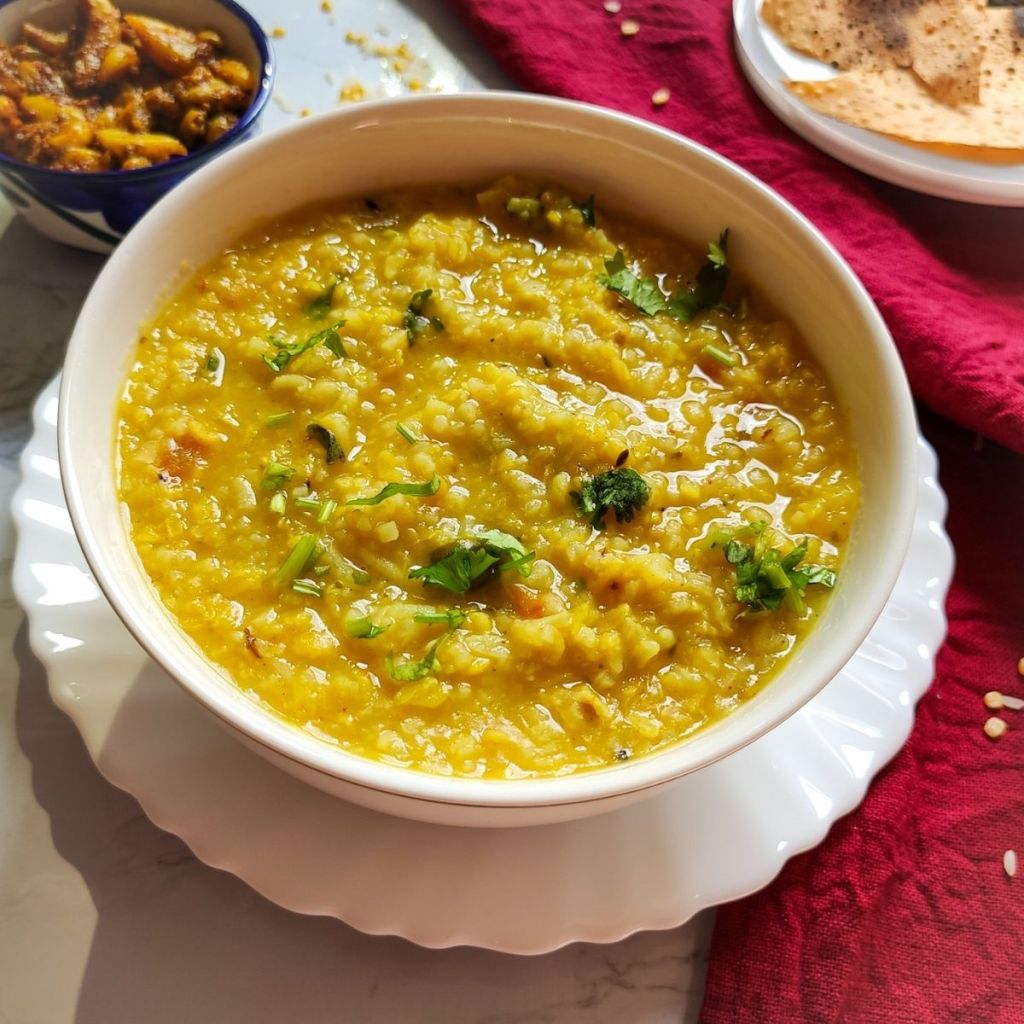
Ghee elevates the taste of any dish that it is added to – a bowl of dal becomes tastier after adding ghee.
Positive Food
Ghee attracts toxic elements in the body and helps in cleansing the body of harmful stuff. It is one of the most sattvic foods. It has a powerful healing properties.
Lowers down the glycemic index
In India, spreading ghee over chappatis and parathas is a standard practice. It is said that applying ghee on chapattis could bring down the glycemic index of the chapatti by some amount, in addition to making it more moist and digestible.
Relieves constipation
Taking 1 or 2 teaspoonfuls of ghee in a cup of hot milk at bedtime is an effective but gentle means of relieving constipation,”
Cardio protective
Though ghee is rich in fat, it contains high concentrations of monounsaturated Omega-3s. These healthful fatty acids support a healthy heart and cardiovascular system
Disclaimer
Though the CLA in ghee has been shown to reduce weight gain in some people, it is also a calorie-dense and fat-rich food. Despite its health benefits, consuming too much ghee can lead to increased weight gain and elevate the risk of obesity.
Dr. Ridhima Gupta
(Ayurvedic consultant)
 AyurNurture Ayurveda & diet clinic